
Q

Quantum Infoway

A Generative AI

A Generative AI Development Company That Ships to Production

We design and ship generative AI features that earn their place in real products — LLM copilots, RAG search, multimodal experiences, and agentic workflows. Built with evaluation pipelines, cost controls, and human-in-the-loop guardrails, so the AI keeps performing after launch.

AI-native delivery Senior oversight Production focus
150+Happy Clients
12+Years Delivery
13+Countries Served
24hResponse Window
How We Work

Delivery that holds up in production

We design and ship generative AI features that earn their place in real products — LLM copilots, RAG search, multimodal experiences, and agentic workflows. Built with evaluation pipelines, cost controls, and human-in-the-loop guardrails, so the AI keeps performing after launch.

What We Deliver

A Generative AI Development Company That Ships t Quantum Infoway ships

01

Typical GenAI Project

Single prompt engineered in a notebook

02

Production-Grade GenAI (How We Build)

Versioned prompts in source control

03

LLM-Powered Chatbots & Copilots

Production chatbots, support copilots, and embedded assistants. Memory, tool use, retrieval, and graceful fallback architecture — built for daily use, not demo screenshots.

04

RAG & Knowledge Retrieval

Document ingestion, chunking, embeddings, vector indexing (Pinecone, Weaviate, pgvector), and reranking. Production-grade retrieval that scales beyond the proof of concept.

05

Fine-Tuning & Custom Models

Fine-tune open-source models (Llama 4, Mistral, Qwen) for cost reduction, domain adaptation, or IP control. Closed-model fine-tuning where supported.

06

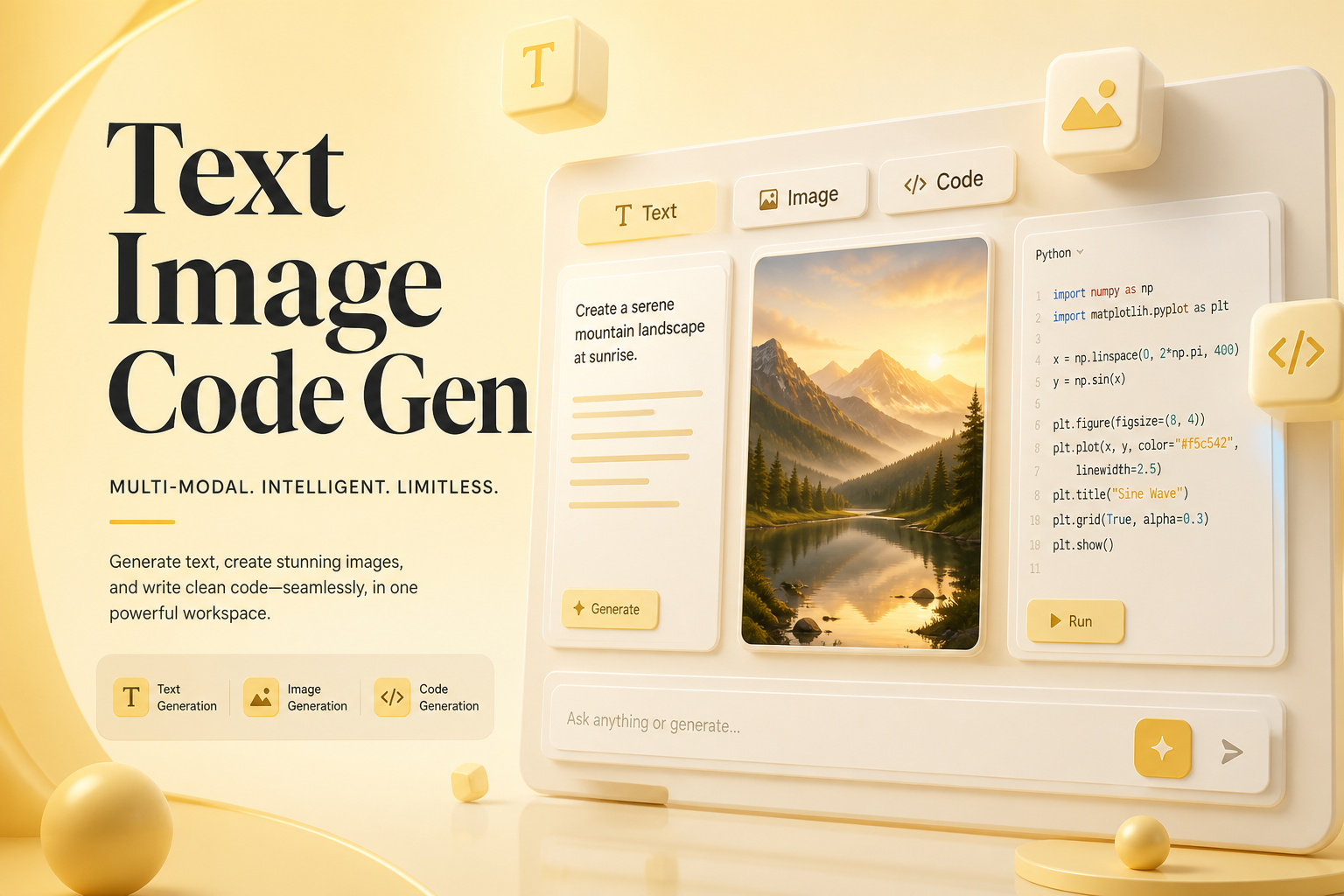
Multimodal AI — Vision, Text, Audio

Vision-language (GPT-5, Claude Fable 5, Gemini 2.5), text-to-image (Imagen, FLUX, Stable Diffusion), and speech (Whisper, ElevenLabs). Combined for richer product experiences.

Let's Build The Next Big Thing

Fill in the form or schedule a meeting to map out a path to success.
Talk to an Expert
Technology We Work With

Stack Quantum Infoway works in

Core

PythonTypeScriptAWSOpenAI
Our Work

Work we have shipped

Built an AI-powered learning platform with a retrieval-augmented tutor

Built an AI-powered learning platform with a retrieval-augmented tutor

  • Unified AI learning platform across web and mobile for diverse student populations
  • Adaptive English tutoring and real-time question answering for non-native speakers
  • Compliance agents that review attendance, generate PDFs, and route for signature
15k+Students served
25%Faster English gains
97%Less compliance effort
Built an AI-powered digital learning platform for one of California's largest ch

Built an AI-powered digital learning platform for one of California's largest charter schools

  • Unified AI learning platform across web and mobile for diverse student populations
  • Adaptive English tutoring and real-time question answering for non-native speakers
  • Compliance agents that review attendance, generate PDFs, and route for signature
15k+Students served
25%Faster English gains
97%Less compliance effort
Shipped an AI chat platform with text and voice for a consumer wellness brand

Shipped an AI chat platform with text and voice for a consumer wellness brand

  • Text and voice conversational experiences for consumer wellness
  • Coach-style flows designed for engagement and trust
  • Production monitoring for quality, safety, and satisfaction
4.2/5User rating
Voice+TextChannels
LiveIn production
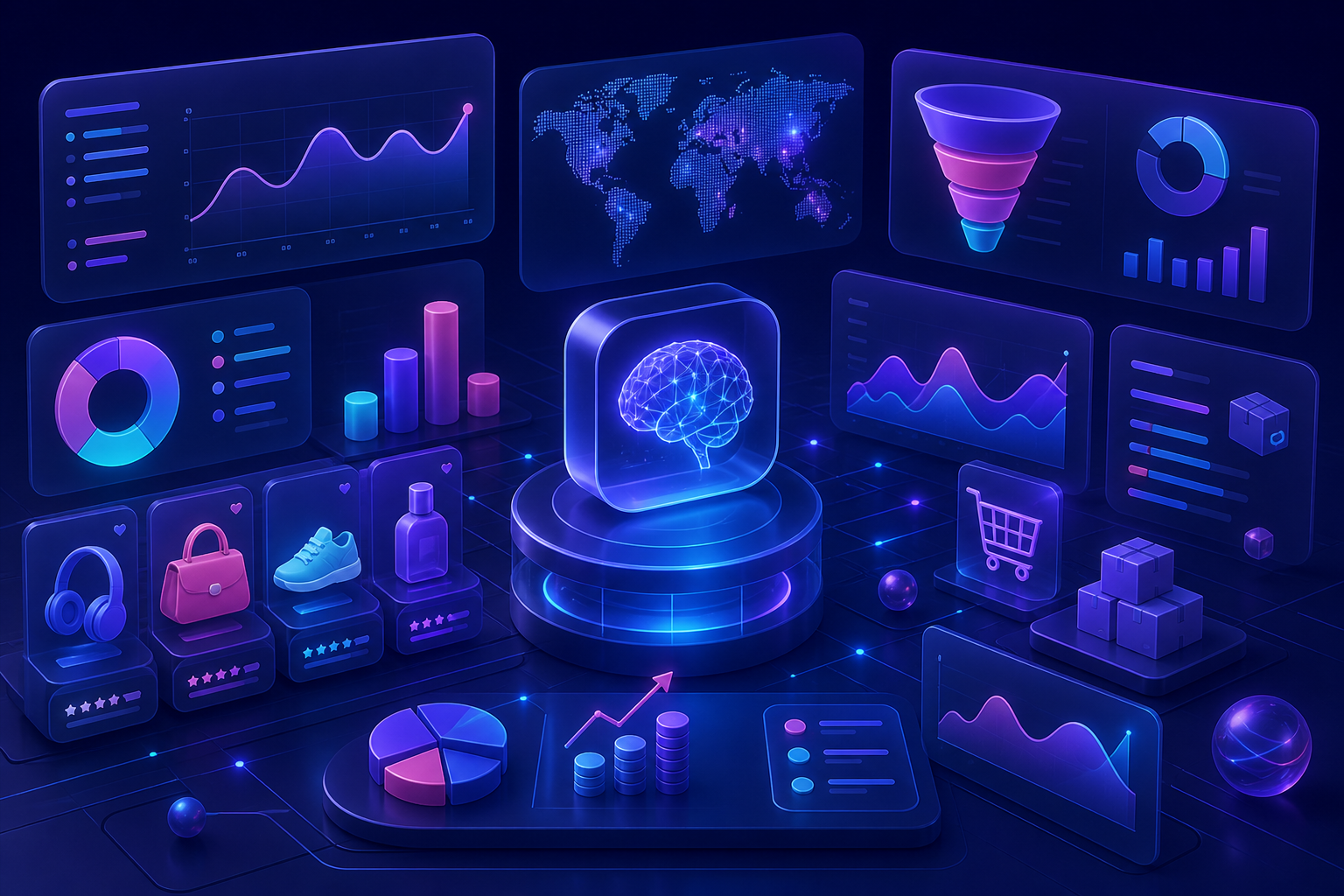
AI-powered e-commerce intelligence platform with generative insights and content

AI-powered e-commerce intelligence platform with generative insights and content

  • Marketplace analytics unified for sellers beyond static dashboards
  • AI assistant for natural-language questions on sales and inventory data
  • Pricing and demand signals that surface actionable next steps
50%Faster reporting
30%Fewer stockouts
25%Pricing accuracy
Guide

How Quantum Infoway thinks about this work

From Demo to Production — How We Build Generative AI Differently

Most generative AI projects look impressive in the demo and fall apart in production. We've built a delivery model that closes that gap — evaluations, guardrails, and operational maturity from day one.

What Does a Generative AI Development Company Do

A generative AI development company designs, builds, and operates LLM powered software for other businesses. That covers scoping the use case, choosing and integrating foundation models, building RAG pipelines over your data, fine tuning where it pays, wiring guardrails and evaluation harnesses, and running the system in production with cost and quality monitoring. The difference between a generative AI development company and a general software agency is the production discipline around models. Prompts change behavior the way code does, model versions shift under you, and output quality has to be measured continuously rather than assumed.

How Much Does Generative AI Development Cost

At our published estimate ranges, an AI pilot or MVP costs $15,000 to $50,000 and ships in 4 to 10 weeks. A production system with an evaluation harness, guardrails, and 3 to 5 integrations costs $50,000 to $150,000 over 2 to 6 months. Enterprise and multi agent platforms run $150,000 to $300,000 and up. Plan for running costs of 15 to 25% of the build cost per year to cover tokens, vector databases, hosting, and monitoring. The model is rarely the cost driver. Data preparation, integrations, and evaluation infrastructure consume most of the budget. The AI development cost guide has the full breakdown with a calculator.

RAG, Fine Tuning, or Prompt Engineering, Which Approach Fits

Start with prompt engineering, add RAG when answers must be grounded in your own data, and fine tune only when behavior, format, or cost targets cannot be met any other way. RAG fits most business use cases because your data changes daily and retraining is not practical. Fine tuning fits stable domains with strong data volume, and it can cut inference costs by letting a smaller model do the work. Production systems usually combine approaches, and agents add tool use on top. Our guides on RAG vs fine tuning and fine tuning vs prompt engineering walk through the decision in detail.

How to Choose a Generative AI Development Company

Judge production evidence, not demo quality. IDC and Lenovo research found 88% of AI proofs of concept never reach widescale deployment, so the differentiator is a partner who has taken systems past the pilot stage. Five checks that separate production teams from demo teams.

Let's Build The Next Big Thing

Fill in the form or schedule a meeting to map out a path to success.

Talk to an Expert

FAQ

A Generative AI Development Company That Ships t FAQs

What is generative AI development and how is it different from traditional AI?
Generative AI development is the practice of building production systems on top of foundation models (GPT-5, Claude Fable 5, Gemini 2.5, Llama 4) that can generate text, images, code, or audio. Traditional AI focused on prediction and classification; generative AI produces new content grounded in your data via retrieval augmented generation (RAG), fine tuning, and prompt engineering.
Which foundation models do you build with?
We work across closed and open models depending on cost, latency, residency, and capability requirements. Closed models include the OpenAI GPT-5 series, Anthropic Claude Fable 5 and Opus 4.8, and Google Gemini 2.5. Open models include Meta Llama 4, Mistral, Qwen, and DeepSeek. We pick per project, and sometimes a multi model router is the right answer.
How do you handle hallucinations and accuracy in production?
Three layers: retrieval-augmented generation (RAG) so responses are grounded in your data, evaluation pipelines with golden test sets running on every change, and human-in-the-loop checkpoints for high-stakes decisions. We also instrument confidence scores and route uncertain outputs to human reviewers.
Can you fine-tune a model on our proprietary data?
Yes. We fine-tune open-source models (Llama, Mistral, Qwen) on customer data for cost reduction, domain adaptation, or IP control. For closed models, we use OpenAI and Anthropic fine-tuning APIs where supported. Every project includes a clear data governance plan, and your training data never leaves your environment without explicit consent.
How much does it cost to hire a generative AI development company?
At our published estimate ranges, an AI pilot or MVP costs $15,000 to $50,000 and takes 4 to 10 weeks. A production AI system with guardrails and an evaluation harness costs $50,000 to $150,000 over 2 to 6 months. Enterprise and multi agent systems run $150,000 to $300,000 and up. Running costs for tokens, vector databases, hosting, and monitoring typically add 15 to 25% of the build cost per year. Our AI development cost guide has the full breakdown and a calculator.
Why work with Quantum Infoway for generative AI development?
Production evidence over promises. We have shipped 250+ products across 13+ countries, including generative AI systems in education, ecommerce, wellness, and healthcare with published metrics such as 97% AI grading accuracy and a 25% revenue uplift. We operate an ISO/IEC 27001:2022 certified information security management system, and roughly 80% of our production code is AI generated and engineer reviewed, verified by our internal team, so delivery is fast without giving up review discipline.
What does a generative AI project timeline look like?
Discovery and POC: 2–4 weeks. Production deployment with evals and monitoring: 8–12 weeks. Ongoing maintenance is a separate retainer covering model upgrades, prompt regression testing, and cost optimisation as token prices and capabilities shift.
How do you control costs for LLM-based features?
Per-request token budgets, prompt compression, response caching, semantic deduplication, multi-model routing (cheap model for easy queries, premium model for hard ones), and continuous monitoring of cost-per-conversion. We make cost visible from day one so it never surprises.
Do you build agentic workflows with tool use?
Yes. We build production agents using LangGraph, OpenAI Agents SDK, Anthropic Claude tool use, and custom orchestration. Agents are scoped, sandboxed, and instrumented — with retries, fallbacks, and human-in-the-loop checkpoints for any irreversible action.
What about data privacy, residency, and compliance?
For regulated workloads we deploy to private endpoints (Azure OpenAI, AWS Bedrock, Vertex AI) or self-host open models on your infrastructure. Quantum Infoway is ISO 27001 and ISO 9001 certified. We map every project to GDPR, HIPAA, or sector-specific requirements as part of discovery.